
Family Home Organization: Tips for Decluttering and Simplifying Your Space
A family home is often bustling with activity—homework, sports gear, toys, gadgets, and a multitude of other daily necessities. As much as we love the energy and vibrancy that comes with family life, it can quickly lead to clutter. Over time, clutter can build up, making your home feel chaotic and overwhelming, even if it’s filled with love and laughter.
In 2025, more families are looking for ways to declutter and simplify their living spaces while maintaining functionality, comfort, and style. A well-organized home not only helps create a peaceful, stress-free environment but also helps everyone in the family stay on top of daily tasks, making it easier to focus on what really matters.
If you’re ready to regain control of your space and start fresh, here are some practical tips for family home organization that will help you declutter and create a functional, calm, and inviting environment for everyone.
1. Start with a Family Home Organization Plan
When it comes to decluttering, having a clear plan is key. A family home is a dynamic space with different needs and activities, so it’s important to establish some basic rules before diving in.
For Parents:
- Set goals: What areas of your home are most important to declutter first? Are there specific rooms or items causing the most stress? Set realistic goals for each room, such as “Declutter the kids’ bedrooms,” “Organize the kitchen,” or “Simplify the entryway.”
- Get everyone involved: Family organization is a team effort. Include your kids in the process by giving them age-appropriate tasks. This can teach responsibility and the value of keeping their spaces tidy.
- Create a timeline: Don’t feel like everything needs to be done in one weekend. Break the tasks down into manageable steps, such as decluttering a drawer one week and tackling a closet the next.
For Kids:
- Set personal goals: If you have older kids, encourage them to make their own organization goals, like cleaning out their toys or sorting through clothes they no longer wear. This will give them a sense of ownership.
- Make it a family activity: Turn decluttering into a fun, family event. Play music, set a timer, and see how much you can organize in a certain time frame. Celebrate progress together!
2. Use Smart Storage Solutions
One of the best ways to keep your home organized is by utilizing smart storage options that help reduce clutter. Well-planned storage solutions allow you to maximize space while keeping everything accessible.
For Parents:
- Multi-functional furniture: Consider investing in furniture pieces that double as storage, such as beds with built-in drawers, ottomans with hidden compartments, or coffee tables with storage underneath. These can be lifesavers for smaller spaces.
- Clear storage bins: Labeling bins for different categories (e.g., “Winter Coats,” “Toys,” “Office Supplies”) helps keep things organized and easy to find. Clear bins allow you to quickly see what’s inside, making it easier for everyone to put things away.
- Vertical storage: Take advantage of your vertical space by using shelves or hanging organizers. Install hooks or pegs for coats, bags, or accessories. Tall storage units help keep things off the floor and out of the way.
For Kids:
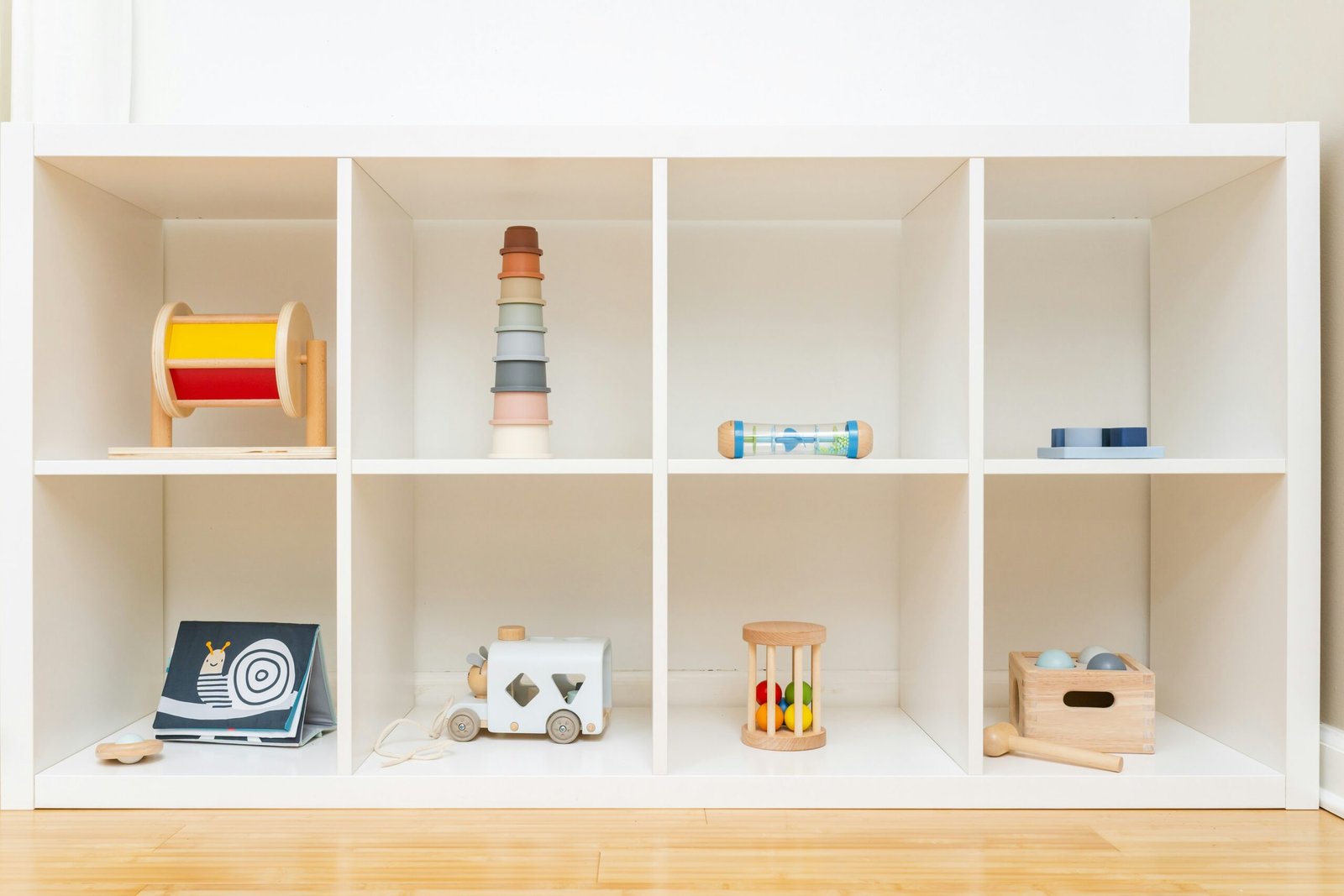
- Toy rotation system: If you have young kids, try the “toy rotation” method. Keep only a few toys out at a time and store the rest. This not only reduces clutter but also makes toys feel “new” again when rotated.
- Personalized storage: Encourage kids to create a system that works for them. For example, a dedicated space for sports gear, books, or school supplies. A little “ownership” can help them take responsibility for their space.
3. Declutter with the “One-In, One-Out” Rule
This rule is incredibly effective in preventing clutter from building up over time. It’s simple: for every new item that enters your home, make sure to get rid of one. This helps you keep your space manageable and avoid accumulation of unnecessary items.
For Parents:
- Seasonal decluttering: At the start of each season, go through your closets, storage bins, and other areas where items tend to accumulate. Donate clothes that no longer fit, discard broken items, and make room for new things.
- Tackle sentimental items: Sentimental items can be especially hard to let go of. Keep only the truly meaningful pieces, and consider taking photos of things that hold emotional value but take up too much space.
For Kids:
- Teach them the “One-In, One-Out” Rule: Help your kids adopt this mindset by showing them that when a new toy or game comes in, they need to give something away. This will not only keep things tidy but also teach them the value of mindful consumption.
- Rotate art or school projects: Keep a special box or frame for school art, but don’t feel like you need to keep every single piece. Rotate them out and store the most cherished pieces for the long term.
4. Create Family Zones and Stations
Establishing designated areas or “zones” in your home can help reduce clutter and make it easier for everyone to find what they need. This is especially helpful in high-traffic areas, like entryways and kitchens, where clutter tends to accumulate the most.
For Parents:
- Entryway station: The entryway is often the first place clutter piles up. Designate specific areas for shoes, coats, bags, and keys. Use hooks, baskets, and trays to organize these items neatly.
- Create a command center: Set up a family “command center” where everyone can access important information such as calendars, schedules, and to-do lists. This could be a bulletin board or a digital calendar that the entire family can view.
- Family charging station: To prevent cords and electronics from piling up all over the house, create a central charging station where phones, tablets, and other gadgets can be plugged in.
For Kids:
- Designate a homework station: Set up a specific area for your kids to do homework. It should have all the supplies they need, like pens, paper, calculators, and books, so they can stay organized.
- Toy stations: Designate spaces for toys, games, and crafts, and encourage kids to put everything back in its place after playtime.
5. Donate or Sell Unwanted Items
One of the best ways to declutter is to purge items you no longer need. Not only does this free up space, but it also gives unwanted items a second life through donation or resale.
For Parents:
- Set up a donation bin: Keep a box or bin handy for items you come across that no longer serve a purpose. Once it’s full, take it to a local charity or thrift store.
- Sell items: If you have high-quality or valuable items that you no longer use, consider selling them. There are numerous platforms, like eBay, Facebook Marketplace, or Poshmark, where you can sell gently used clothing, toys, or furniture.
For Kids:
- Teach the value of giving: Involve your kids in the donation process. Explain to them how their gently used toys or clothes can benefit others in need. This helps develop a sense of empathy and the importance of decluttering for a greater good.
- Have a family yard sale: Turn decluttering into a family event by hosting a yard sale. Not only will this help clear out clutter, but it can also be a fun way to get kids involved in earning extra money.
6. Maintain Your Decluttered Space
Once you’ve decluttered your home, it’s important to maintain the organization. Regularly spend a few minutes tidying up so clutter doesn’t creep back in.
For Parents:
- Set a weekly family clean-up time: Dedicate a small amount of time each week to tidying up as a family. Make it a routine so it becomes a habit.
- Stay on top of paper clutter: Papers (from school, bills, etc.) can quickly pile up. Set up a filing system or digitize important documents to avoid them cluttering countertops and tables.
For Kids:
- Clean up together: Get your kids involved in maintaining a tidy home by making cleaning fun. Turn it into a game or challenge them to clean up a room in a certain amount of time.
- Teach responsibility: Encourage kids to tidy up after themselves daily. Small, manageable tasks (e.g., making their bed, putting away toys) can help instill good habits that will last into adulthood.
Conclusion: Simplify Your Home for a Stress-Free Life
Decluttering and organizing your family home doesn’t have to be an overwhelming task. With the right strategies in place, you can create a space that’s functional, efficient, and calming. By involving everyone in the process, setting up smart storage solutions, and staying on top of regular tidying, you can simplify your space and enjoy a more peaceful, organized home.
Remember, home organization is an ongoing process, not a one-time event. Embrace small changes over time, and soon enough, you’ll find that your family home feels like a well-oiled machine—creating more room for relaxation, creativity, and connection.